Your Ultimate Guide to Deck Materials and Cost Estimation for 2026
- Support Inbox
- Apr 23
- 3 min read

Accurately estimating your deck project saves time, money, and frustration. Mistakes in planning often lead to unexpected expenses, delays, and wasted materials. This guide walks you through measuring your deck, choosing materials, calculating quantities, and understanding costs. You’ll also learn how to avoid common errors and use online tools to simplify your project planning.
Measuring Your Deck
Start by measuring the deck’s length and width to find the total area. Multiply length by width to get square footage, which is the basis for estimating materials and costs.
Measure in feet for easy calculation.
Include all deck sections, such as extensions or built-in seating.
Consider the deck’s shape—L-shaped or multi-level decks require breaking the area into rectangles and adding them.
Remember that layout affects material needs. For example, angled boards or curved edges may increase waste.
Accurate measurements ensure you buy the right amount of materials and avoid costly shortages or excess.
Deck Materials Breakdown
A deck consists of several key components. Understanding each helps you estimate materials and costs more precisely.
Deck Boards
Choose between natural wood (cedar, redwood, pressure-treated pine) and composite boards made from wood fibers and plastic. Wood offers a classic look but requires maintenance. Composite is low-maintenance and more durable but costs more upfront.
Joists
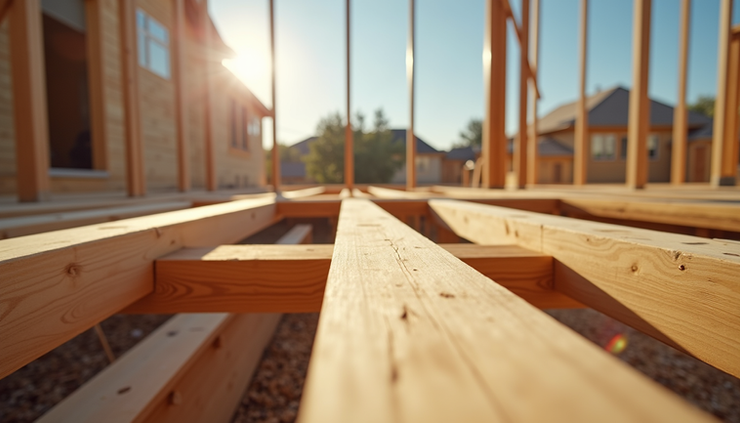
These horizontal supports run beneath deck boards. Typically made from pressure-treated lumber, joists hold the deck’s weight and must be spaced correctly.
Beams
Beams support joists and transfer loads to posts. Usually made from larger lumber or engineered wood.
Posts
Vertical supports that hold beams and joists. Posts are anchored in footings and must be sized for deck height and load.
Footings
Concrete bases that secure posts to the ground. Footings prevent settling and provide stability.
Fasteners
Nails, screws, and connectors designed for outdoor use. Stainless steel or coated fasteners resist corrosion.
Railing Systems
Safety rails come in wood, metal, glass, or composite. Railings add to material and labor costs but are often required by code.
Material Calculations
Estimating materials requires understanding spacing and waste factors.
Board Spacing
Deck boards are typically spaced 1/8 to 1/4 inch apart to allow drainage and expansion.
Joist Spacing
Standard spacing is 16 inches on center (OC). This spacing supports typical deck boards and loads.
Waste Factor
Add 10–15% extra materials to cover cutting mistakes, damaged boards, and layout adjustments.
For example, a 12 ft by 16 ft deck has 192 square feet. With a 15% waste factor, order materials for about 221 square feet.
Cost Breakdown
Deck costs vary by size, materials, and labor.
Cost per Square Foot
Wood decks typically cost $15 to $30 per square foot, including materials and labor. Composite decks range from $25 to $45 per square foot.
Material vs Labor
Materials usually account for 40–50% of total cost. Labor covers framing, decking, railing, and finishing.
Wood vs Composite
Wood is cheaper upfront but requires ongoing maintenance. Composite costs more initially but lasts longer and needs less upkeep.
Knowing these costs helps you budget realistically and choose materials that fit your needs.
Common Mistakes
Avoid these pitfalls to keep your project on track:
Underestimating materials needed, leading to multiple trips to the store.
Ignoring waste factors, which causes shortages.
Incorrect joist or board spacing, risking structural issues.
Forgetting to include railing and stairs in material and cost estimates.
Overlooking local building codes that affect design and materials.
Careful planning prevents delays and extra expenses.
Using a Calculator
Deck calculators simplify planning by automating measurements and material estimates.
Enter your deck dimensions and layout.
Select materials and features like railing or stairs.
Get detailed lists of required boards, joists, posts, and fasteners.
Receive cost estimates based on current prices.
Using tools like the Deck Calculator and Deck Cost Calculator improves accuracy and saves time. You can also use the Deck Railing Calculator to estimate railing materials and costs.
Plan Your Deck Project
Calculating materials and costs upfront helps you avoid surprises and control your budget. Whether you want to build your deck yourself or hire professionals, accurate estimates are essential.
Take the next step:
These tools make planning easy and ensure your deck project runs smoothly.


Comments