Mastering Grading, Drainage and Earthworks for Successful Construction Projects
- Support Inbox
- Apr 14
- 2 min read

Grading, drainage, and earthworks form the backbone of any construction project. They ensure structural stability, control water flow, and help contractors estimate materials and costs accurately. Ignoring these fundamentals can lead to costly delays, damage, and rework. This post breaks down the essentials contractors need to master for smooth, efficient site preparation.
Why Grading Matters
Grading shapes the land to control how water moves across the site. Proper grading prevents water from pooling near foundations, which can cause structural damage or delays.
Rough grading sets the general slope and contours of the site.
Finish grading smooths the surface for landscaping or paving.
Key rule: Always slope the ground away from buildings by about 1 to 2 percent to direct water flow safely.
For example, a 100-foot-long driveway should drop about 1 to 2 feet from the house to the street to avoid water pooling near the foundation.
How Drainage Prevents Costly Problems
Drainage systems keep water away from slabs and foundations, protecting structures from erosion and water damage.
Common drainage solutions include:
Proper slope to guide water downhill
Swales, shallow ditches that channel water away
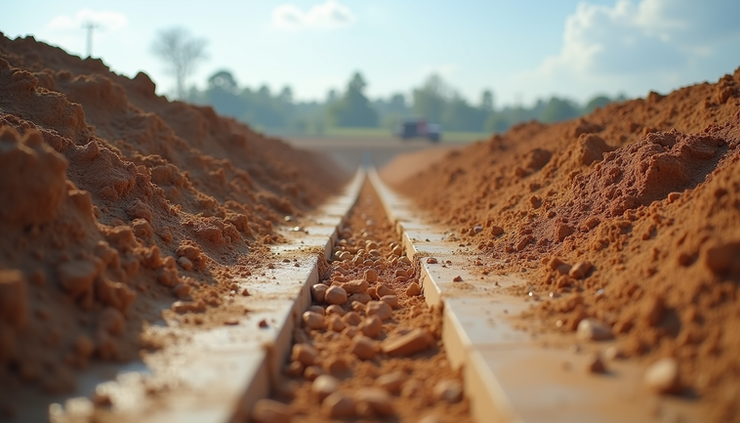
French drains, gravel-filled trenches with perforated pipes to redirect water underground
Ignoring drainage planning leads to soil erosion, foundation cracks, and expensive repairs. For instance, a poorly drained site may require costly re-excavation and foundation waterproofing later.
Earthworks Build a Stable Base
Earthworks cover excavation, cutting and filling soil, and compacting the ground to create a solid foundation.
Excavation removes unsuitable soil or rock.
Cut and fill balances soil levels by moving earth from high to low areas.
Compaction compresses soil to prevent settling.
Proper compaction is critical. Unstable soil can cause uneven settling, cracking slabs, or even structural failure years after construction.
Contractors often use heavy rollers or plate compactors to achieve the right soil density. Testing compaction with a nuclear gauge or similar tools ensures the base meets engineering specs.
Common Mistakes to Avoid
Contractors frequently face issues from:
Flat or incorrect slopes that trap water
Skipping drainage planning or installing inadequate systems
Poor soil compaction leading to settling
Miscalculating cut and fill volumes, causing material shortages or excess waste
These mistakes increase project costs and timelines. For example, underestimating fill material can halt work while waiting for deliveries.
Why These Fundamentals Matter for Estimation
Accurate grading, drainage, and earthworks planning directly affect:
Material quantities like soil, gravel, and fill
Labor hours for excavation and compaction
Equipment needs such as excavators and compactors
Poor planning leads to wasted materials and budget overruns. Using calculators or software tools helps contractors estimate grading and drainage needs precisely, avoiding surprises on site.
Mastering grading, drainage, and earthworks ensures your projects start on a solid foundation. Focus on proper slopes, effective water control, and stable soil compaction to prevent costly problems down the line. Use reliable estimation tools to plan materials and labor accurately.
Take the next step: Use our calculators to estimate grading, drainage, and material needs accurately and keep your projects on track.


Comments