How to Accurately Measure for Concrete: A Comprehensive Step-by-Step Guide
- Support Inbox
- Apr 15
- 3 min read

Measuring for concrete can feel tricky if you’re new to the process. Getting the measurements right is crucial to avoid ordering too much or too little concrete, which can save you time, money, and hassle. This guide breaks down the steps to measure length, width, and depth accurately, convert those measurements into cubic yards, and includes example calculations to make the process clear.
Whether you’re planning a driveway, patio, foundation, or any other concrete project, this step-by-step guide will help you calculate the right amount of concrete needed.
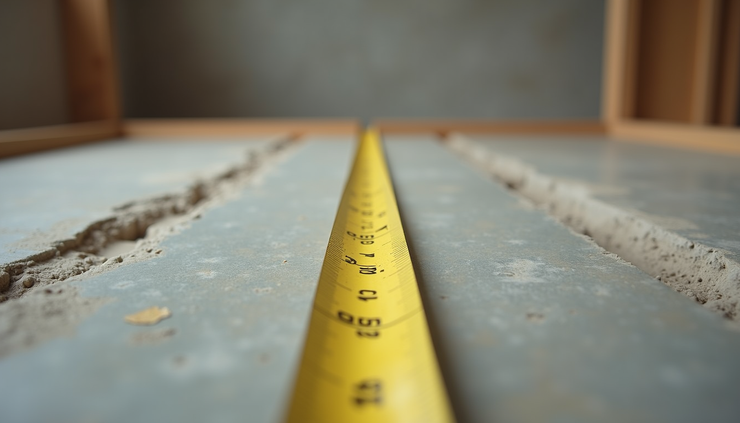
Measuring tape laid out to capture length and width of a concrete slab frame
Measuring Length, Width, and Depth
The first step in measuring for concrete is to determine the dimensions of the area you want to fill. These dimensions are length, width, and depth (or thickness).
Step 1: Measure Length and Width
Use a measuring tape to measure the length of the area in feet.
Measure the width of the area in feet.
If the area is irregular, break it down into smaller rectangles or shapes, measure each separately, and add the totals.
Step 2: Measure Depth
Concrete depth is usually measured in inches.
Use a tape measure or ruler to measure the thickness of the concrete slab or form.
Common depths for slabs range from 4 to 6 inches, but this depends on your project.
Tips for Accurate Measurement
Measure twice to avoid errors.
For uneven surfaces, take multiple depth measurements and use the average.
Record all measurements in feet and inches for easy conversion.
Converting Measurements to Cubic Yards
Concrete volume is calculated in cubic yards because concrete is sold by the cubic yard. To convert your measurements into cubic yards, follow these steps:
Step 1: Convert All Measurements to Feet
Length and width are already in feet.
Convert depth from inches to feet by dividing by 12.
Example:
If depth = 6 inches, then depth in feet = 6 ÷ 12 = 0.5 feet
Step 2: Calculate Volume in Cubic Feet
Multiply length × width × depth (all in feet):
```
Volume (cubic feet) = Length (ft) × Width (ft) × Depth (ft)
```
Step 3: Convert Cubic Feet to Cubic Yards
There are 27 cubic feet in 1 cubic yard. Divide the volume in cubic feet by 27:
```
Volume (cubic yards) = Volume (cubic feet) ÷ 27
```
Example Calculations
Let’s say you want to pour a concrete slab that is:
Length: 12 feet
Width: 10 feet
Depth: 6 inches
Step 1: Convert depth to feet
6 inches ÷ 12 = 0.5 feet
Step 2: Calculate volume in cubic feet
12 ft × 10 ft × 0.5 ft = 60 cubic feet
Step 3: Convert to cubic yards
60 ÷ 27 = 2.22 cubic yards
You will need approximately 2.22 cubic yards of concrete for this slab.
How do you calculate concrete volume?
To calculate concrete volume, multiply the length, width, and depth of the area you want to fill (all in feet) to get cubic feet. Then divide the cubic feet by 27 to convert to cubic yards, which is the standard unit for ordering concrete.
Additional Tips for Measuring Concrete
Round up your volume by 10% to account for spillage, uneven subgrade, and waste.
For cylindrical shapes like pillars, use the formula for the volume of a cylinder:
Volume = π × radius² × height (all in feet), then convert to cubic yards.
For irregular shapes, divide the area into smaller sections, calculate each volume, then add them together.
Using Online Tools to Simplify Measurement
If manual calculations seem complicated, you can use online calculators designed for concrete measurement:
Concrete Calculator helps you enter your dimensions and get volume instantly.
Square Footage Calculator assists in measuring area before calculating volume.
Check out our Pillar page for specific guidance on measuring and calculating concrete for pillars.
These tools reduce errors and save time.
Final Thoughts on Measuring for Concrete
Accurate measurement is the foundation of a successful concrete project. By carefully measuring length, width, and depth, converting to cubic yards, and allowing for waste, you ensure you order the right amount of concrete. This prevents delays and extra costs.
👉 Ready to get started? Use our Concrete Calculator to quickly calculate your concrete materials and make your project run smoothly.


Comments