Essential Rebar Spacing Guide for Concrete Projects: Slabs Patios and Decks
- Support Inbox
- Apr 15
- 4 min read

Concrete reinforcement plays a crucial role in the strength and durability of slabs, patios, and decks. Proper rebar spacing ensures that concrete structures can handle loads, resist cracking, and last for decades. This guide covers everything you need to know about rebar spacing standards, when to choose mesh versus rebar, and the differences between structural and non-structural slabs.
What is standard rebar spacing?
Standard rebar spacing typically ranges from 12 to 18 inches on center, depending on the slab type and load requirements. For most residential slabs, 18 inches is common, while heavier loads require closer spacing, such as 12 inches. Proper spacing balances strength and cost.
Rebar Spacing Standards for Concrete Slabs
Rebar spacing depends on the slab's purpose, thickness, and expected load. Here are common standards:
Residential slabs: 18 inches on center is typical for light loads like patios and walkways.
Commercial slabs: 12 to 16 inches on center to support heavier loads such as vehicles or machinery.
Heavy-duty slabs: 6 to 12 inches on center for industrial floors or decks with significant weight.
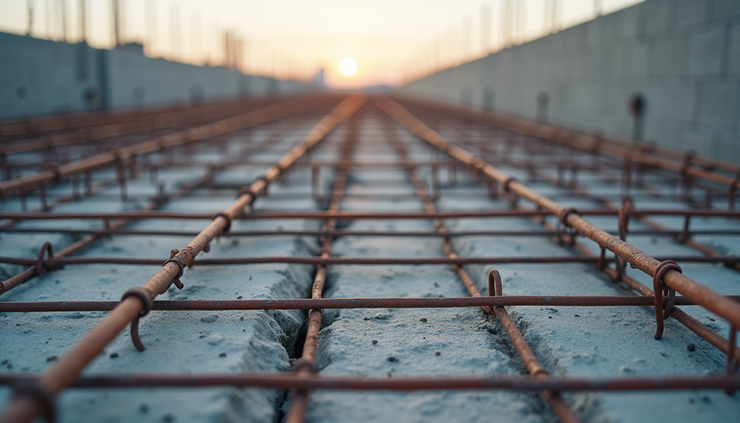
Spacing is measured center-to-center between bars in both directions, creating a grid that distributes stress evenly.
Factors Influencing Rebar Spacing
Slab thickness: Thicker slabs can support wider spacing.
Load type: Point loads require closer spacing.
Concrete strength: Higher strength concrete may allow wider spacing.
Environmental conditions: Exposure to freeze-thaw cycles or chemicals may require tighter reinforcement.
For detailed calculations, use our Concrete Calculator to estimate the right amount of rebar and concrete volume.
When to Use Mesh vs. Rebar
Choosing between welded wire mesh and rebar depends on the project’s structural needs and budget.
Welded Wire Mesh
Made of thin steel wires welded into a grid.
Best for non-structural slabs like sidewalks, patios, and driveways.
Provides crack control but less strength than rebar.
Easier and faster to install, reducing labor costs.
Rebar
Steel bars available in various diameters.
Used in structural slabs, decks, and heavy-load applications.
Offers superior tensile strength and load distribution.
Requires more precise placement and labor.
For slabs requiring high strength and durability, rebar is the preferred choice. For lighter applications, mesh may suffice.
Structural vs. Non-Structural Slabs
Understanding the difference between structural and non-structural slabs helps determine reinforcement needs.
Structural Slabs
Support loads from buildings, decks, or heavy equipment.
Require engineered rebar placement and spacing.
Must meet building codes and safety standards.
Typically thicker and reinforced with closer rebar spacing.
Non-Structural Slabs
Serve as walkways, patios, or decorative surfaces.
Do not support significant loads.
Use welded wire mesh or minimal rebar.
Thinner and less reinforced.
Choosing the correct slab type and reinforcement ensures safety and longevity. For more on slab design, see our Slab Thickness Guide.
How to Determine Proper Rebar Spacing
Follow these steps to set the right spacing:
Identify slab type and load: Residential patio or commercial floor.
Check slab thickness: Thicker slabs allow wider spacing.
Consult building codes: Local regulations may specify minimum spacing.
Calculate load requirements: Use structural engineering principles or consult a professional.
Select rebar size: Larger bars may allow wider spacing.
Plan grid layout: Space bars evenly in both directions.
For quick estimates, try our Concrete Calculator to input slab dimensions and get reinforcement recommendations.
Common Rebar Sizes and Their Spacing
Choosing the right size and spacing depends on the slab’s load and thickness.
Tips for Installing Rebar Correctly
Maintain cover: Keep rebar at least 2 inches from slab edges to prevent corrosion.
Tie bars securely: Use wire ties to hold bars in place during concrete pouring.
Use supports: Chairs or spacers keep rebar at the correct height within the slab.
Avoid overlaps: Overlap bars by at least 40 times their diameter when splicing.
Inspect before pouring: Ensure grid is even and properly spaced.
Proper installation maximizes slab strength and durability.
Rebar Spacing in Patios and Decks
Patios and decks often face different stresses than floors. Consider these points:
Patios: Usually non-structural, use welded wire mesh or #3 rebar spaced 18 inches apart.
Decks: Structural decks require #4 or #5 rebar spaced 12 inches or less.
Outdoor exposure: Use epoxy-coated or galvanized rebar to resist corrosion.
Slab thickness: Patios typically 4 inches thick; decks may be thicker.
For more on slab design and thickness, visit our Slab Thickness Guide.
Common Mistakes to Avoid
Spacing too wide: Leads to cracking and weak slabs.
Insufficient cover: Causes rebar corrosion and slab failure.
Ignoring load requirements: Results in unsafe structures.
Poor rebar tying: Bars shift during pouring, weakening reinforcement.
Using mesh where rebar is needed: Reduces slab strength.
Avoid these errors to ensure a long-lasting concrete project.
Summary and Next Steps
Proper rebar spacing is essential for strong, durable concrete slabs, patios, and decks. Use 12 to 18 inches spacing depending on load and slab type. Choose mesh for light, non-structural slabs and rebar for structural applications. Follow installation best practices and consult local codes.
For precise calculations and material estimates, 👉 Calculate Your Concrete Project with our easy-to-use Concrete Calculator. Also, explore our Pillar Page for comprehensive concrete project guides and the Slab Thickness Guide to match reinforcement with slab depth.



Comments